More than 100 professionals come together in Meath to strengthen response to domestic abuse
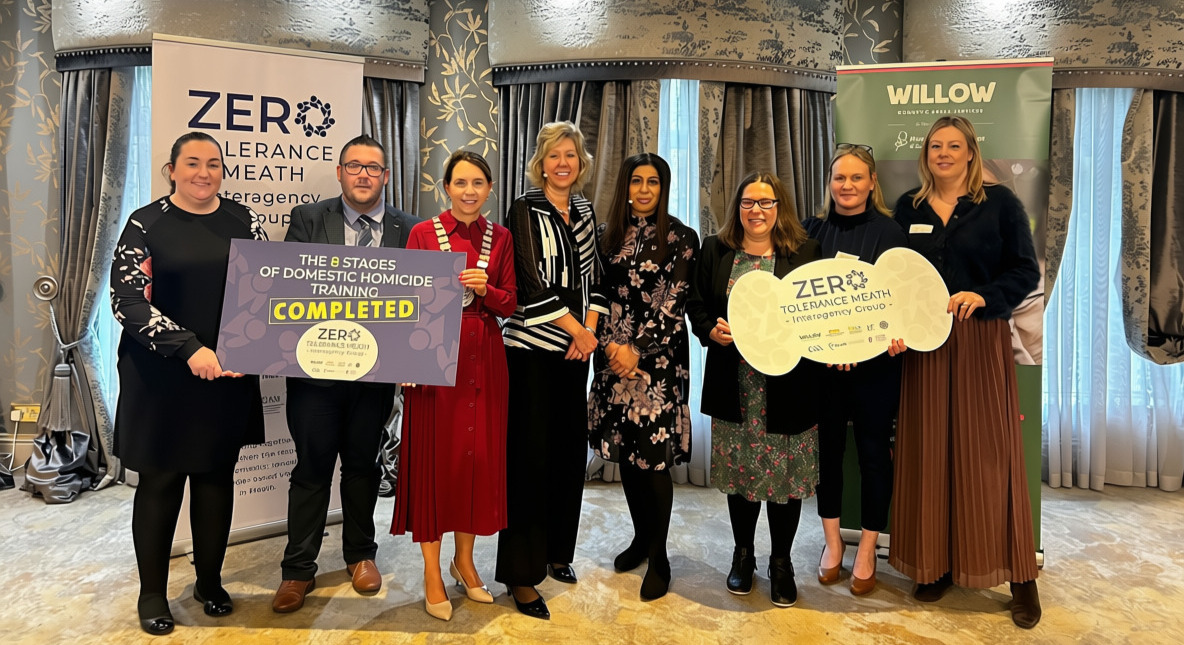
More than 100 professionals from organisations and agencies across County Meath have come together for the county’s first interagency conference focused on strengthening understanding of domestic abuse and improving how services work together to respond.
The two-day conference, which took place on October 14thand 15th at the Ardboyne Hotel in Navan was organised by the Zero Tolerance Meath Interagency Group.
The group brought together representatives from Willow Domestic Abuse Services, An Garda Síochána, Tusla, the HSE, Meath County Council and the GAA, alongside professionals from other agencies. Together, they are working to strengthen the response to domestic, sexual and gender-based violence in Meath.
Willow Domestic Abuse Services (formerly Meath Women’s Refuge & Support Services) is a member of the group and supports more than 700 women and children experiencing domestic abuse across County Meath each year. The number of women and children seeking support reflects the scale of domestic abuse across the county and the need for a strong, coordinated response from the different services that may be involved in supporting them.
The conference centred on the 8 Stages to Domestic Homicide,a framework developed by criminologist Professor Jane Monckton Smith. This framework explores the pattern of behaviours that can occur in the lead-up to an intimate partner homicide and was the basis for discussion and learning throughout the two-day event. The conference was presented by Sarah Ellis, Barrister at Law with expertise in Coercive Control and Intimate Partner Homicide and Meena Kumari, Director of H.O.P.E Training & Consultancy, an organization that provides specialised, trauma-informed training and consultancy services focused on Domestic, Sexual, and Gender-Based Violence (DSGBV).
The conference also included contributions from James Brannigan, founder of The Katie Trust and a former Detective Sergeant with the Police Service of Northern Ireland, who shared his experience of investigating domestic homicide and cases involving coercive control.
Participants also heard from Jason Poole, whose sister, Jennifer Poole, was killed by her former partner. Jason spoke about his experience and his campaign for Jennie’s Law, a public online register of serious domestic violence convictions that was passed into law earlier this year.
The conference is part of a wider commitment across Meath to strengthen the response to domestic, sexual and gender-based violence. Part of this response includes plans for a new purpose-built domestic abuse refuge in Navan, which received Part 8 planning approval this year and will increase refuge capacity in the county when open. It is expected to open in 2028.
Speaking at the conference, Cathaoirleach of Meath County Council, Sarah O’Reilly, said:
“This is the first conference of its kind in the county, and I hope it marks the beginning of many more opportunities for us to come together, learn from each other, and ultimately strengthen our collective response to domestic abuse across the county. Meath is ambitious in its plans to tackle domestic abuse. We will continue to strengthen the services and supports available to victims and survivors and continue building the knowledge and awareness we need to recognise abuse and work together effectively to tackle it.”
Frances Haworth, CEO of Willow Domestic Abuse Services, said:
“Domestic abuse does not belong to one service or organisation. For many women experiencing domestic abuse, the first person they tell may not be someone working in a specialist domestic abuse service. It might be a Garda, a healthcare professional, a social worker, a teacher, a family member or friend, or another service or person they trust. That’s why building understanding across different services, and knowing how we can advise and support each other, is so important. Bringing more than 100 professionals together for this conference was an important opportunity to build that shared understanding and strengthen the connections between services. We all have a role to play in working together to support victims and survivors of domestic abuse.”
Other News